

In light of the ongoing socio-political crisis in the Northwest and Southwest regions of Cameroon, significant displacement and humanitarian needs have emerged. The Danish Refugee Council (DRC) together with its two partner national NGOs in the presence another national NGO, SHUMAS in a two-day workshop in Bamenda under the auspices of the First Line Local Assistance for Swift Humanitarian response (FLASH) project. The workshop that held on 3 April and 2nd May 2025 brought together more than 20 participants from the four organizations in the presence of the DRC’s Regional Emergency guru from Dakar, Senegal.
Inspired by the DRC’s experience in the Sahel region, notably from Bokinafaso, Mali and Niger and using context specific tools from the seasoned PUI Far North region RRM, blending with SHUMAS’ long experience with the IOM, the design workshop was a perfect blend of pure experience and NW region resource persons.
The RRM is geared towards improving the living conditions of people made vulnerable following a population movement caused by a conflict, an epidemic or a natural disaster. The RRM is based on a system of humanitarian monitoring, assessments and multi-sectoral responses to populations most severely affected by a shock. The response mechanism will be triggered in the event of a sudden and non-cyclical acute crisis, after analysis of the context and prioritization of needs.

Throughout the workshop, participants were engaged in discussions and exercises aimed at enhancing their understanding of the RRM and its key components. Emphasized was laid on the importance of reporting triggers, triangulation, rapid deployment capabilities, prepositioned resources, and effective coordination among humanitarian actors. The response time for the RRM is designed to be within fifteen days, with active involvement from the entire humanitarian community, spearheaded by GPA and COMINSUD.

One of the critical components discussed was the Humanitarian Watch, which involves network and alert monitoring to ensure timely responses to shocks. Participants learned about the objectives of the Humanitarian Watch, including the necessity of triggering alerts quickly following a crisis and disseminating information within the humanitarian community to facilitate evaluation missions.
The participants explored what constitutes a humanitarian alert, the triggers for such alerts, and the processes involved in transmitting information. They also addressed the challenges of false alerts, which can arise from inadequate local authority involvement, poorly defined committee roles, and potential exploitation of humanitarian activities. The consequences of false alarms were highlighted, including poor targeting and diminished trust among humanitarian stakeholders, bringing to mind the need for effective communication and training.
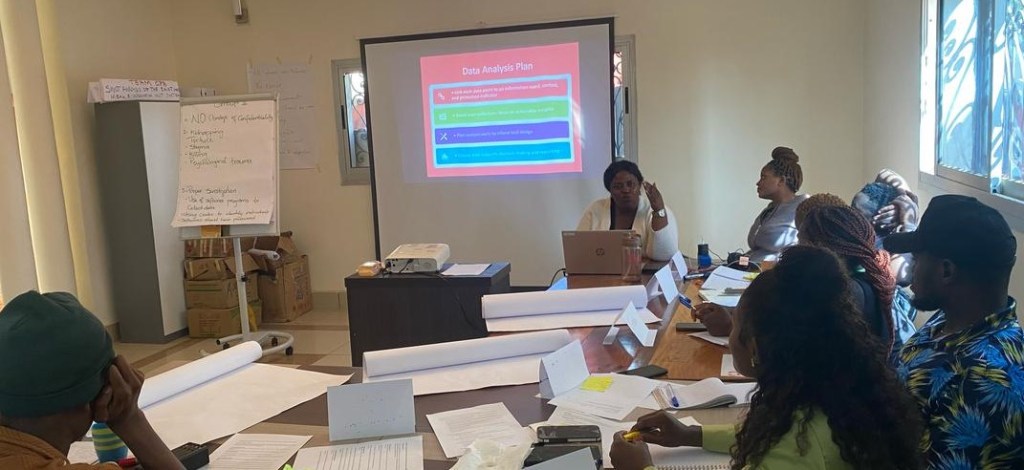
Practical group exercises allowed participants to map intervention areas and identify essential focal points for a timely response to displacement shocks. They discussed the necessary elements for deploying evaluation teams, the number of focal points required, and the level of engagement necessary for effective implementation.
On the second day of training, the focus shifted to assessment and analysis methodologies, outlining the response cycle which includes alert monitoring, needs assessment, analysis, assistance, and post-distribution monitoring. Participants were introduced to tools for conducting multisectoral assessments, including household questionnaires, market assessments, and interviews with key stakeholders.
Groups collaborated to develop a monitoring, evaluation, accountability, and learning (MEAL) framework for data collection, ensuring comprehensive coverage of all aspects of the response. The training also addressed targeting strategies for providing assistance to displaced households, emphasizing the importance of community awareness and involvement in the targeting process.
Core humanitarian standards were reiterated throughout the sessions, emphasizing the need for relevant assistance, accessibility, safety, and community participation. The training concluded with actionable next steps, including building capacity for multisectoral assessments, developing standard operating procedures for cash distribution, and drafting a comprehensive project guidance note.
This two-day training significantly enhanced the knowledge and skills of participants, equipping them with the necessary tools for implementing the FLASH project effectively. Through collaboration between GPA, COMINSUD, and DRC, the training aims to improve humanitarian response capabilities in the Northwest region, addressing the pressing needs of communities affected by ongoing crises.
 Community Initiative for Sustainable Development