

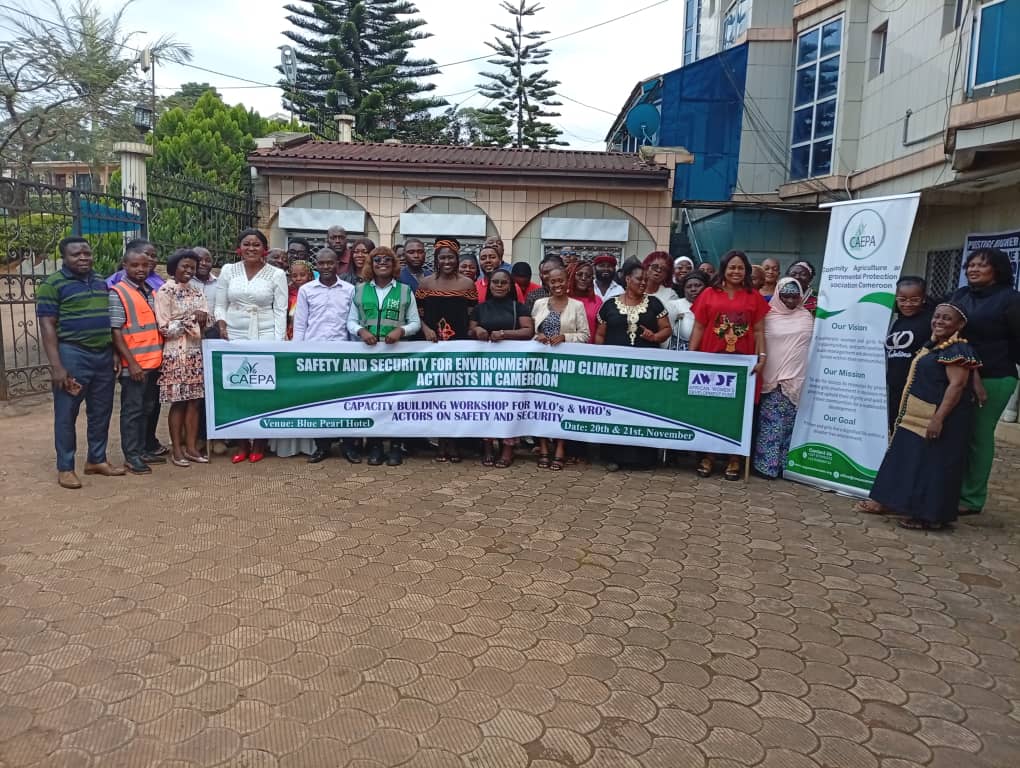
CAEPA (Community Agriculture and Environmental Protection Association Cameroon) organized a two-day capacity-building workshop on Strengthening Safety and Security from 20–21 November 2025 at Blue Pearl Hotel. The training brought together Women-Led Organizations (WLOs) and Women’s Rights Organizations (WROs), including COMINSUD, for an intensive and practical learning experience. The overall goal was to build a strong network of informed actors committed to creating safer, more inclusive spaces for women and environmental defenders.
Over the two days, participants explored innovative strategies to enhance women’s safety, examined relevant legal frameworks, and reviewed global best practices in safety and security management. Key discussions centered on clarifying the difference between safety protection (preventing unintentional harm) and security protection (preventing intentional harm). Facilitators further explained what it means to strengthen organizational safety and security through risk assessments, training, technology, policy development, and multi-sectoral collaboration.
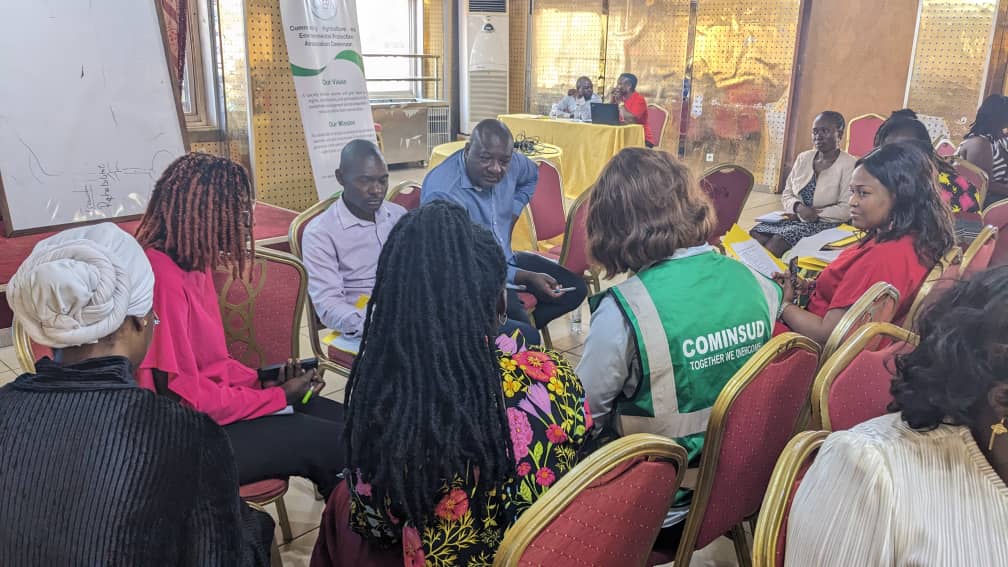
The workshop highlighted the importance of protecting staff, ensuring continuity of operations, and promoting accountability to affected populations. Through interactive group work, participants identified common workplace risks and explored methods for detecting gaps in humanitarian safety systems, including staff surveys, interviews, incident trend analysis, field observations, and community feedback.
Another major component of the training was guiding participants to develop SMART organizational safety action plans, those that are Specific, Measurable, Achievable, Relevant, and Time-bound. Facilitators emphasized the need for gender-responsive and inclusive safety planning, noting that risks often differ for women, men, persons with disabilities, and LGBTQI+ staff. The sessions also unpacked identity-based threats such as GBV, harassment, profiling, and accessibility challenges.
Participants learned and applied key principles including Do No Harm, confidentiality, intersectionality, and participatory decision-making. Practical approaches for identifying gender-based safety gaps were reviewed, such as safety audits and gender-disaggregated surveys. Proposed solutions included improved infrastructure, inclusive reporting mechanisms, gender-sensitive movement protocols, and strengthening community acceptance to improve overall safety.
By the close of the workshop, participants had gained concrete skills in developing organizational action plans, assigning responsibilities, mobilizing resources, setting timelines, and monitoring progress. Key lessons underscored the importance of deeper risk analysis, stronger operational tools, continuous staff training, and meaningful community engagement.
The two-day training equipped COMINSUD and other participating organizations with vital tools and knowledge to build safer institutions and to enhance the protection and wellbeing of staff and communities across humanitarian and development settings.
 Community Initiative for Sustainable Development